
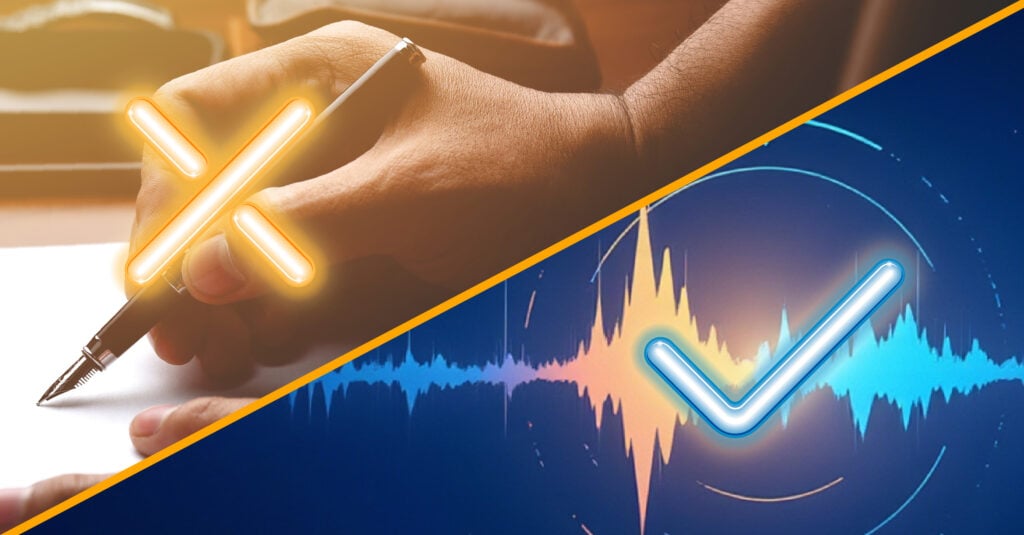
Picture this: you are about to close a major deal, but everything comes to a halt because a single document is stuck in the mail. Days pass. The agreement sits in limbo, and the opportunity slips further out of reach.
This is a reality for many businesses. Paper signatures slow things down, frustrate clients, and make it harder to move quickly. What used to feel professional now creates an expensive bottleneck in a world that expects speed and simplicity.
The good news is that there is a better way. Companies that abandon wet-ink signatures for digital tools, including ContractPal’s voice signature technology, can finalize contracts in minutes while keeping the client engaged and ready to sign.
The Perils of Wet-Ink Nightmares
Take a typical insurance agency. An employee spends hours preparing contracts, prints them, and sends them out. From there, everything slows down. Postal delays, missing pages, and the fact that some clients do not have easy access to scanners can stretch a simple process into weeks. When multiple signatures are required, the delays compound.
Now imagine a different experience. A client working with a financial advisor gives verbal approval over the phone. Their voice signature is recorded, verified, and securely stored within minutes. The deal is closed before the call ends. There is no printing, no mailing, and no need for the client to log into a portal.
This is why more businesses are choosing to abandon wet-ink signatures for digital workflows that move at the speed of their customers. The gap between these two scenarios is more than convenience. It is the difference between a deal slipping away and a deal closed on the spot.
Revolutionizing the Signature Landscape with Digital Technologies
Digital signatures are more than a simple replacement for pen and paper. They represent a complete shift in how businesses execute agreements.
With ContractPal’s e-signature and voice signature solutions, organizations can:
- Close deals in minutes rather than days
- Eliminate geographic and logistical barriers
- Meet strict compliance and security requirements
Making the switch to digital also allows businesses to deliver the fast, seamless, and sustainable experiences that today’s customers expect.
Benefits of Abandoning Wet-Ink Signatures
Speed and Productivity
Digital signatures reduce signing times from days to seconds. A document that might have taken a week to get signed and returned can now be finalized before the end of a client call. Faster transactions mean fewer lost opportunities and quicker revenue recognition.

Sustainability and Environmental Impact
Going digital reduces the need for printing, mailing, and physical storage. This not only lowers operating costs but also aligns with corporate sustainability goals by cutting paper waste and carbon emissions.
Cost Efficiency
Traditional signing workflows come with hidden costs such as staff hours, shipping fees, storage space, and correcting errors. Digital solutions cut these expenses and minimize the risk of costly mistakes, making the signing process both faster and more reliable.
Security, Compliance, and Auditability
Digital signatures are recognized under major U.S. laws, including the ESIGN Act and UETA. This makes them just as legally binding as traditional wet-ink signatures when implemented correctly, giving businesses confidence that their agreements are enforceable.
Advanced features such as encrypted storage, tamper-evident audit trails, and biometric verification for voice signatures ensure every agreement is secure, verifiable, and defensible in court or regulatory audits. These systems capture every step of the signing process, from initial consent to final completion, providing a reliable record that protects both businesses and clients.
Transitioning Smoothly: Steps from Paper to Digital
Adopting digital signatures requires more than purchasing software. It is a change in process and culture.
- Assess Current Processes: Audit your existing workflows to identify delays, bottlenecks, and unnecessary manual steps.
- Implement a Phase-Wise Rollout: Start with transactions that have high volume and low complexity, so teams and clients see immediate benefits.
- Educate and Train Staff: Provide hands-on training, clear documentation, and ongoing support to ensure your team is confident in using the new tools.
Best Practices for Digital Signature Implementation
- Integrate with Existing Systems: Choose solutions that work seamlessly with your CRM, ERP, and compliance tools so data flows smoothly between systems.
- Leverage Automated Workflows: Use automated routing, notifications, and reminders to keep documents moving efficiently without the need for manual follow-ups.
- Focus on User Experience: Make the signing process as simple as possible for clients. Options like voice signatures are especially helpful for users who may have limited technical skills.
Paper vs. Digital: A Process Comparison
Traditional paper-based workflows involve multiple physical steps such as printing, mailing, scanning, and filing. Each step introduces the potential for delays, errors, and lost documents, slowing down business processes and frustrating clients.
By choosing to abandon wet-ink signatures for digital workflows, organizations remove these friction points entirely. Documents are delivered instantly, signatures can be completed from any device or using voice, and storage and retrieval are automated. The result is faster processing, fewer mistakes, and a smoother, more satisfying experience for clients.
Real-World Impact: Case Study Insights
Industry leaders who choose to abandon wet-ink signatures for digital solutions have seen dramatic results. For example, First Marblehead reduced loan application processing times by up to 50 percent after making the transition. This efficiency gain allowed them to maintain a competitive edge and improve client satisfaction, showing how digital signatures can transform both speed and service.
Overcoming Misconceptions
Some business leaders still have concerns about the legality or security of digital signatures. In reality, when implemented following best practices, both digital and voice signatures are just as legally binding and often more secure than traditional paper documents.
Strong authentication, encryption, and adherence to U.S. laws such as the ESIGN Act and UETA ensure that these agreements are valid and fully defensible in legal and regulatory settings.
Voice Signatures: The Next Evolution
While e-signatures are now widely used, voice signatures are emerging as the next step in making signing faster and easier. They offer the same legal validity as traditional digital signatures while simplifying the process for clients. There is no need to download apps, create accounts, or remember passwords. Clients simply give their consent verbally, and the system records, encrypts, and securely stores it with biometric verification.
The Competitive Advantage of Going Digital
The business landscape rewards companies that can act quickly. By choosing to abandon wet-ink signatures for digital, organizations can:
- Deals close before competitors can make their pitch
- Compliance checks happen in real time
- Clients remember the experience as simple and convenient
Over time, these advantages add up to higher conversion rates, stronger client loyalty, and measurable cost savings.
Embrace the Future for Enhanced Efficiency
In today’s fast-moving business world, every second counts. Relying on wet-ink signatures slows processes, frustrates clients, and adds unnecessary steps. By choosing to abandon wet-ink signatures for digital alternatives, companies can streamline workflows, ensure compliance, reduce costs, and create a smoother experience for everyone involved.
The move to paperless, efficient processes is here, and businesses that adopt it now will be the ones setting the standard in their industries. Learn more from ContractPal about making the switch to voice signatures.